Overview
Machine unlearning has emerged as a crucial capability for computer vision models that must forget, remove, or steer away from undesired data or concepts. This workshop (in short, MUV) brings together researchers working on unlearning methods for recognition and generative tasks, including selective forgetting, safe image and video generation, privacy-preserving learning, and ethical compliance under regulations such as GDPR and CCPA.
By uniting technical advances with responsible AI practices, MUV aims to establish unlearning as a cornerstone of trustworthy visual intelligence. Forgetting is not the opposite of learning but its responsible counterpart.
Invited Speakers
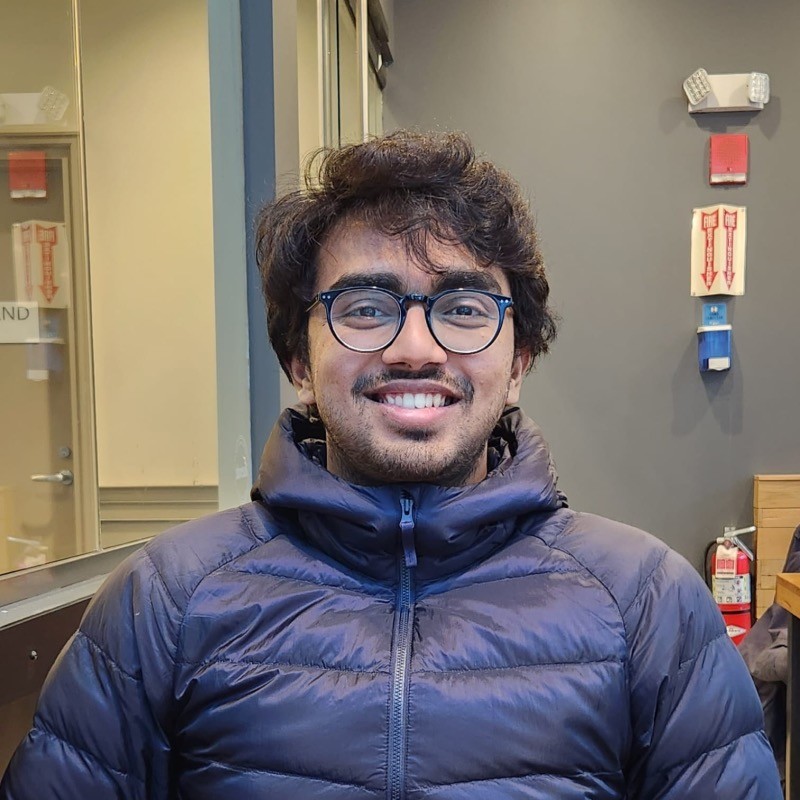
Rohit Gandikota
Northeastern University

Sijia Liu
Michigan State University
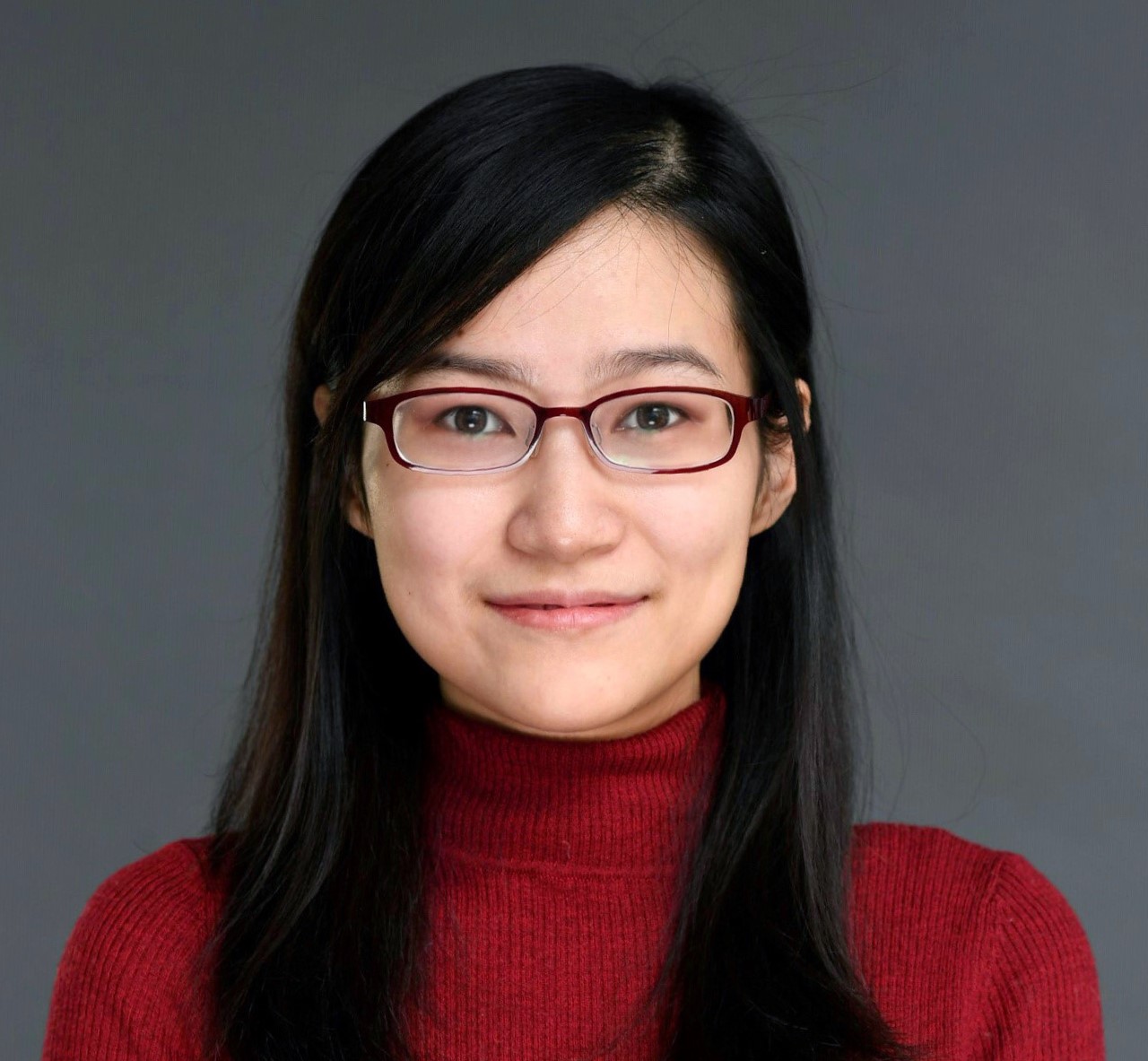
Tsui-Wei (Lily) Weng
UC San Diego

Maximilian Dreyer
Fraunhofer HHI
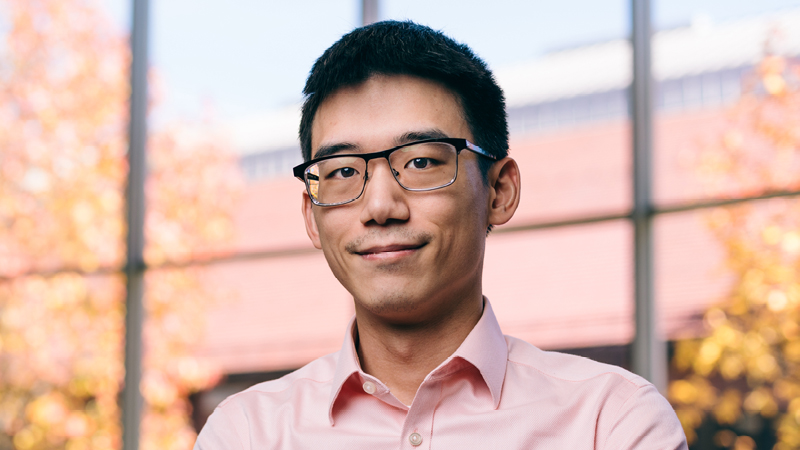
Raymond A. Yeh
Purdue University
Schedule
JUNE 3rd (Mile High 1AB)| Time | Session | Speaker |
|---|---|---|
| 1:00 PM - 1:10 PM | Opening Remarks | |
| 1:10 PM - 1:50 PM | Invited Talk: Forgetting Unwanted Knowledge in Foundation Models Without Breaking Them | Sijia Liu Michigan State University |
| 1:50 PM - 2:05 PM | Oral #1: Class Unlearning via Depth-Aware Removal of Forget-Specific Directions | Arman Hatami & Romina Aalishah |
| 2:05 PM - 2:20 PM | Oral #2: Evaluating and Enhancing Generative Model Unlearning with LLM World Knowledge | Eric Yeats |
| 2:20 PM - 2:55 PM | Invited Talk: Unlearning Is Not The Goal, It’s Just the Beginning | Rohit Gandikota Northeastern University |
|
3:00 PM - 4:20 PM Poster Boards: 67 - 76 |
Poster Session & Coffee Break | |
| 4:20 PM - 4:45 PM | Invited Talk: From Explanation to Unlearning: Concept-Based Diagnosis and Control | Maximilian Dreyer Fraunhofer HHI |
| 4:45 PM - 5:10 PM | Invited Talk: Beyond Post-Hoc Unlearning: Immunization and Semi-parametric Design | Raymond A. Yeh Purdue University |
| 5:10 PM - 5:50 PM | Invited Talk: Building Controllable AI with Interpretable Representations: From Steering to Machine Unlearning | Tsui-Wei (Lily) Weng UC San Diego |
| 5:50 PM - 5:55 PM | Closing Remarks |
Accepted Papers
Proceedings Track
TIU-ReID: Target Identity Unlearning for Person Re-Identification
Jingong Chen, Dongyoun Kim, Chulwoo Pack, Jun Huang, Kwanghee Won
RUB: Evaluating Residual Knowledge in Unlearned Models
Hao Xuan, Xingyu Li
Evaluating and Enhancing Generative Model Unlearning with LLM World Knowledge
Oral PresentationScott Mahan, Eric Yeats, Darryl Hannan, Henry Kvinge, Timothy Doster, Wilson Fearn
Bias Redistribution in Visual Machine Unlearning: Does Forgetting One Group Harm Another?
Yunusa Haruna, Adamu Lawan, Ibrahim Abdulhamid, Hamza Dauda, Jiaquan Zhang, Chaoning Zhang, Shamsuddeen Hassan Muhammad
Class Unlearning via Depth-Aware Removal of Forget-Specific Directions
Oral PresentationArman Hatami, Romina Aalishah, Ilya Monosov
Machine Unlearning in Computer Vision: A Survey from Discriminative Classifiers to Generative Foundation Models
Kaveh Safavigerdini, Juan Mogollon, Amirreza Daghighi, Kannappan Palaniappan
Non-Archival Track
Selective Concept Unlearning for Safe and Compliant Image Generation
Mahule Roy, Subhas Roy
Erasure or Erosion? Evaluating Compositional Degradation in Unlearned Text-To-Image Diffusion Models
Arian Komaei Koma, Seyed Amir Kasaei, Ali Aghayari, AmirMahdi Sadeghzadeh, Mohammad Hossein Rohban
Erasing Thousands of Concepts: Towards Scalable and Practical Concept Erasure for Text-to-Image Diffusion Models
Hoigi Seo, Byung Hyun Lee, Jaehyun Cho, Sungjin Lim, Se Young Chun
Unlearning the Unpromptable: Prompt-free Instance Unlearning in Diffusion Models
Kyungryeol Lee, Kyeonghyun Lee, Seongmin Hong, Byung Hyun Lee, Se Young Chun
RASE: Retain-Agnostic Machine Unlearning via Activation Subspace Projection
Aaryaman Kalani, Dhruv Kumar, Mohan Kankanhalli, Murari Mandal, Yash Sinha
Unsafe2Safe: Controllable Image Anonymization for Downstream Utility
Minh T. Dinh, SouYoung Jin
Call for Papers
Topics Covered
MUV’s objective is to facilitate engaging and influential discussions across the following topics:
- Core methodologies for machine unlearning in vision, spanning data-centric approaches (curation, selective removal), parameter-centric strategies (fine-tuning), and training-free steering techniques (refusal vectors, prompt editing);
- Applications of unlearning in generative AI, with emphasis on safe image and video generation that avoids copyrighted, explicit, or biased content;
- Unlearning for recognition tasks such as face identification, medical imaging, or video classification, where privacy, fairness, and compliance are central;
- Ethical and legal implications of unlearning in vision, in light of privacy regulations and copyright compliance.
Submission Requirements
Important Notes:
- Submissions must use the CVPR 2026 Author Kit (LaTeX/Word).
- Follow all CVPR 2026 author instructions and submission policies.
- All submissions must be anonymized for double-blind review.
- Papers accepted to CVPR 2026 main conference may be submitted to the No Proceedings track.
- Submissions to another CVPR 2026 workshop are not permitted (for Proceedings Track).
Submission Tracks
Proceedings Track
Full papers (up to 8 pages). Accepted papers will be included in CVPR proceedings.
No Proceedings Track
Extended abstracts (up to 4 pages) or already published works (up to 8 pages). Ideal for preliminary results or stimulating discussion.
Organizers
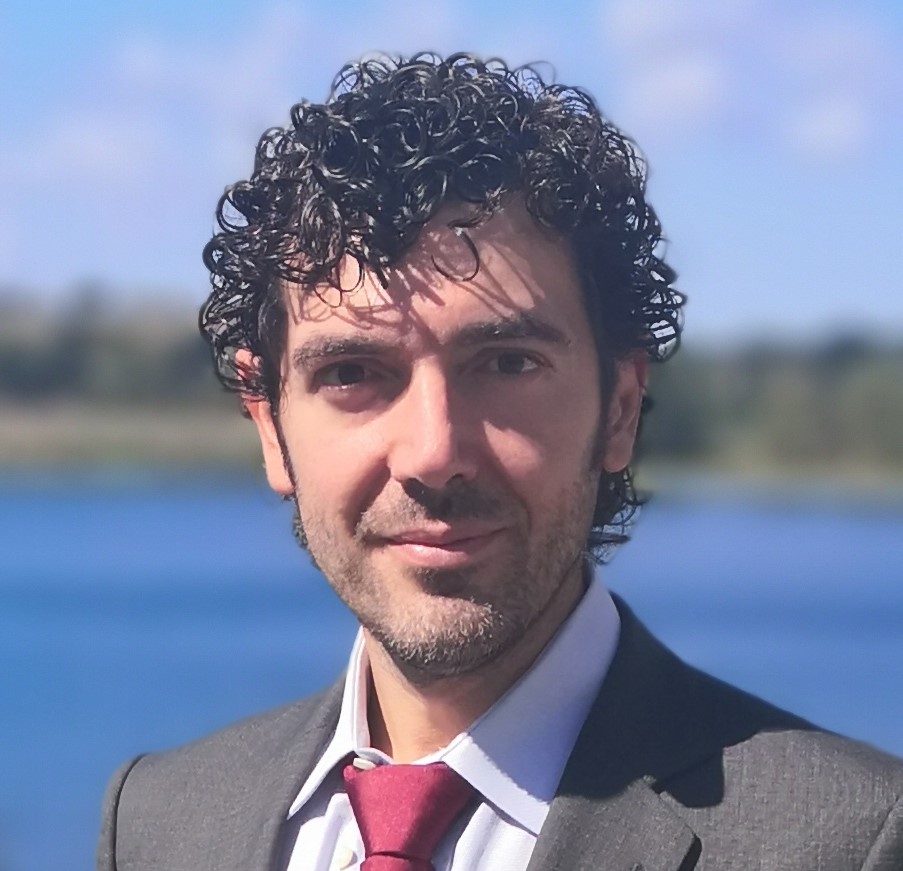
Fabio Galasso
Sapienza University of Rome
Iacopo Masi
Sapienza University of Rome
Joanna Materzynska
Meta

Bardh Prenkaj
TU Munich

Alessio Sampieri
ItalAI
Bernt Schiele
MPI for Informatics